
The Advanced Guide to Claude Code
An ultimate pro-level guide for product managers, aspiring builders and engineers.

👉 Skip the intro if you want to get to the gist and start coding ;)
Greg Brockman in his recent X post said that “we’re undergoing a software renaissance”.
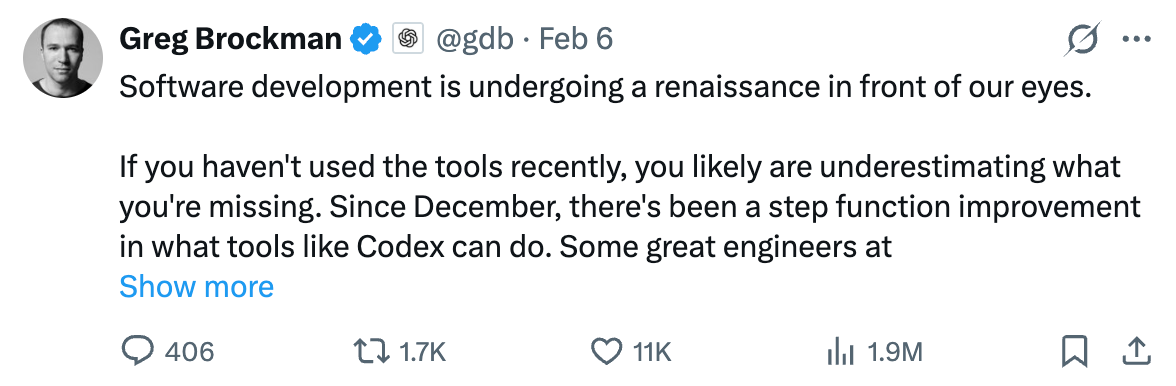
He also dropped a bomb.
Engineers at OpenAI don’t write code anymore.
Codex does it for them.
SWEs orchestrate the agents.
Dario Amodei and more recently Boris Chernyi (Claude Code lead) said literally the same about Anthropic.
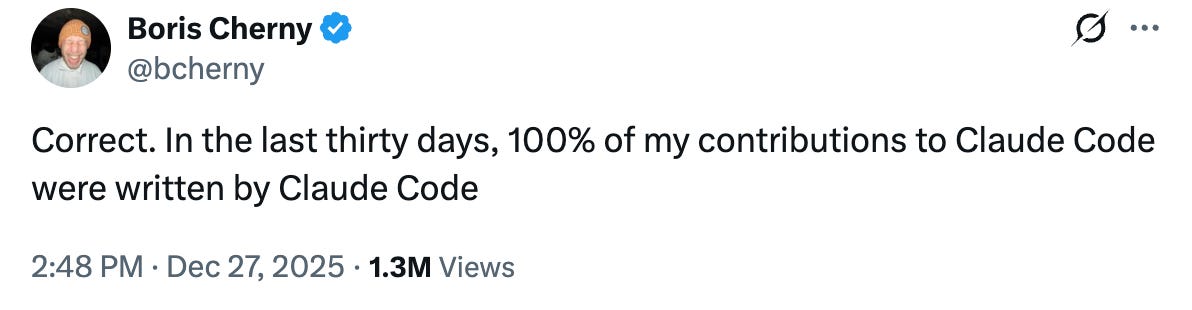
Engineers don’t write code. Claude does it for them.
When asked how much time a Facebook Group refactoring would take today with Claude Code - Boris said “that maybe 5 engineers instead of 40 and 3-6 months instead of 1.5+ years”.
Extrapolating into the near future, it might be fully handled by a single engineer.
Since the moment the Opus 4.5 and GPT-5.2 were released we’ve seen a step function change.
A few days ago with the rollout of Opus 4.6 we’re officially past the “semantic knowledge of code”.
Agents using Opus 4.6 as a brain were able to build an entire C-compiler from scratch in 20 hours. It was a multi-year exercise in the past.
We’ve moved to a new era.
The one that’s based on natural language programming and handled autonomously. Also the one that is shockingly fast.
My personal take is that product management has changed for good as well.
I’ve been pushing hundreds of GitHub commits in the last month.
Few months back I didn’t even have an account on GitHub.
Of course, there’s still strong inertia. Many old-school two-pizza teams are going to run on remaining fumes for a while.
But large teams are inevitably getting disrupted.
They will be disrupted by people who know and understand the AI tools deeply.
And the key tool in your arsenal today is definitely Claude Code.
I’m using a Max account and have a team of agents running almost 24/7.
I’d call myself a hardcore user.
Tinkering around with projects and building stuff has been my hobby from childhood.
Now since the feedback cycle has sped up dramatically, I’m in awe.
I can see my wildest projects unfold in front of me in minutes. Not months or years as it was before.
In this “author’s” guide I’ll share everything I’ve learned over the last three months of maxing out Claude Code.
You’ll learn how to set it up for optimum efficiency, build and inject skills, use key MCPs, use hooks, manage memory, GitHub workflows, persistent sessions and even introduce your own release cycle cadence. The 10 key chapters will cover everything you need to know and will move you from an amateur to a real pro.
I’ll purposefully avoid the basics that you already know OR can google easily. This would be about advanced tier usage. Say, you’re an aspiring builder who wants to create an Enterprise-ready (no kidding) MVP for your startup at a fraction of the cost.
You’ll be equipped to do it straight away after reading the article.
👉 For the basics you can refer to this video:

1️⃣ Agentic workflows
Claude Code is agentic out of the box.
What it means is that it breaks the project into tasks and assigns agents to them with different tools.
The approach sounds great on the surface, but there are caveats.
